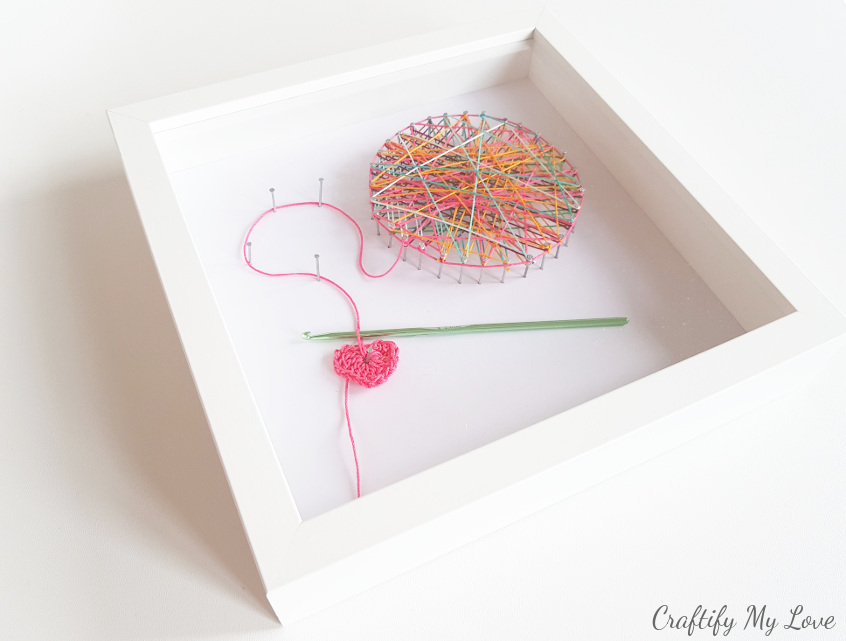
Every crocheting lover needs this wall art in their craft room. It’s a simple step-by-step tutorial on how to make a crocheting inspired piece of home decor that absolute beginners (crocheters & DIYers) can do.
Patterns, projects and techniques
Every crocheting lover needs this wall art in their craft room. It’s a simple step-by-step tutorial on how to make a crocheting inspired piece of home decor that absolute beginners (crocheters & DIYers) can do.
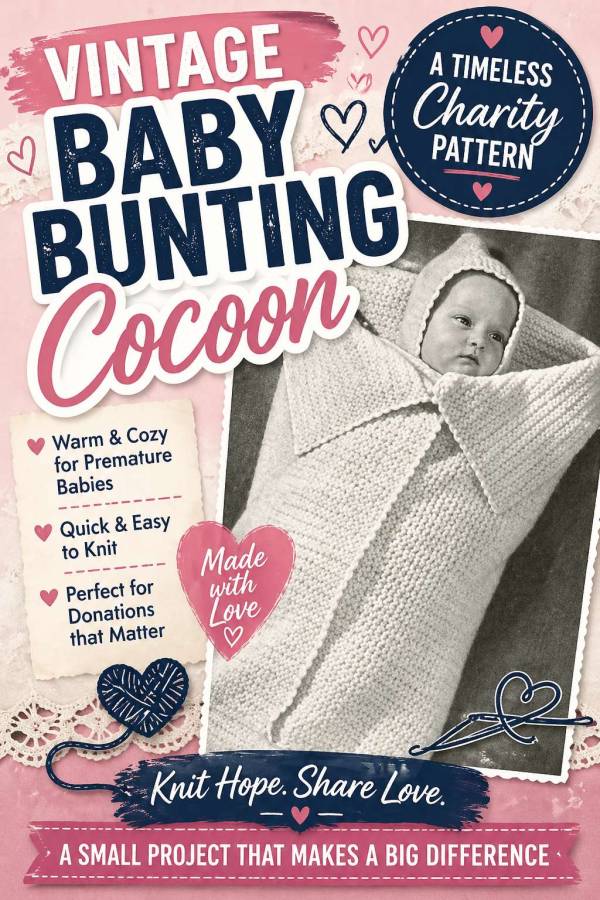
There is something so sweet about a vintage baby crochet pattern, isn’t there? Before baby registries became wildly specific and before every nursery had a “theme,” handmade baby pieces were often practical, warm, and made with so much care that they were passed from one family to another.
This Vintage Baby Bunting Cocoon crochet pattern has exactly that feeling. It is a traditional-style baby bunting, also known as a baby cocoon, and it uses a pretty star stitch texture that gives the finished piece that lovely old-fashioned, hand-crocheted look. The original pattern calls for Fleisher’s Deluxe Zephyr Germantown yarn, 15 balls for the bunting, and a size 4 crochet hook, with a gauge of 3 stars and 4 rows to 1 inch.
This is not one of those “whip it up while watching one episode of something cosy” projects. Let’s just get that out of the way now. The pattern begins with a chain of 225 stitches and builds the main fabric in star stitch, so this is more of a thoughtful, sit-down-and-settle-in crochet project than a quick charity make.
But goodness, it has charm.
The first thing that stands out is the texture. Star stitch gives this bunting a dense, decorative fabric that looks far more detailed than a plain double crochet or granny-style baby item. It has that beautiful vintage pram blanket look — the sort of thing you can imagine folded carefully in a drawer with lavender sachets and baby cards from decades ago.
The pattern also includes extra finishing details, including a border, an end piece, a buttonhole band, and buttons. Those little details are what make it feel like a proper garment-style baby cocoon rather than just a stitched rectangle folded into shape.
For makers who enjoy vintage crochet patterns, this is the sort of project that feels satisfying because it asks you to slow down a little. You need to pay attention, count properly, and probably avoid crocheting the tricky bits when you’re tired. Ask me how many times I’ve had to unpick vintage instructions because I confidently “knew what it meant.” Famous last words.
I would not call this a beginner crochet project. Not because it is impossible, but because vintage crochet patterns often assume the maker already understands quite a lot.
The instructions use older wording, and the pattern itself notes that it is a vintage pattern that may use vintage terms. It was originally published by Fleisher Yarn Co. in Fleischer Fashions, Volume 75 in 1946, and it has not recently been tested.
That means you’ll want to treat this as a vintage crochet adventure rather than a modern step-by-step photo tutorial.
Before starting, I would strongly suggest:
Vintage hook sizing can be confusing, and yarns have changed a lot since the 1940s. So rather than relying only on the hook description, use the gauge as your guide. Your future self will thank you, and so will your yarn stash.
This depends on what kind of charity crochet you like to make.
If you are looking for quick crochet items to donate, this probably is not the fastest choice. Baby hats, small blankets, booties, bonding squares, washcloths, and simple premie projects are usually much quicker when you need to make several items.
But if your charity group accepts handmade baby items and you enjoy making one special piece rather than ten smaller ones, this vintage baby bunting could be a beautiful donation. It has that “made with love” feeling that can be very special for a new parent or a keepsake-style baby gift.
Because this is a baby item, do check the donation guidelines of the hospital, charity, or organisation before making it. Some groups have strict rules about fibres, buttons, sizing, and whether items can include fastenings.
Also, for safety, baby cocoons and handmade buntings should be used with care. Current safe sleep guidance recommends keeping loose blankets and soft items out of a baby’s sleep space, and Red Nose also advises keeping a baby’s head and face uncovered during sleep. I would treat this style of handmade baby cocoon as a supervised-use item, photo prop, pram-style layer, or keepsake gift unless the receiving organisation gives different guidance.
I love that this pattern has history. There is something grounding about working from a design that has been around since 1946. It reminds us that craft has always been practical, generous, and deeply personal.
The star stitch texture is another lovely feature. It gives the bunting a plush, almost woven appearance, and it feels much more special than a plain crochet baby sack.
I also like that it is a true vintage pattern, not a modern pattern pretending to look vintage. That does mean it requires patience, but it also means the finished item has a very authentic old-fashioned look.
This would be especially lovely made in a soft cream, warm ivory, pale duck egg blue, or a gentle vintage pink. I’d avoid anything too busy because the star stitch is already doing plenty of visual work. Let the texture be the star — no pun intended, though I’m absolutely taking credit for it.
The biggest thing to watch is the time commitment. This is not a fast charity crochet project. If you are making items for a donation drive with a deadline, you may want to choose a quicker baby hat or small baby blanket instead.
The second thing is the instructions. Vintage patterns can be beautifully written, but they are often compact. They don’t always explain every step the way modern crochet patterns do, so you may need to slow down and translate the instructions into today’s crochet language as you go.
The third thing is safety. Any baby item with buttons needs extra care. Use strong thread or yarn, sew buttons securely, and check whether your chosen charity accepts buttoned baby items at all.
If you are going to tackle a vintage crochet baby bunting like this, a few good basics will make life much easier:
A comfortable crochet hook in the size needed to match gauge, soft baby-friendly yarn, locking stitch markers, a row counter, blunt-tip yarn needles, and washable buttons are all worth having nearby.
For affiliate placement, this article would naturally suit links to:
A good stitch marker set is especially useful here because once you start with 225 chains, you do not want to be recounting from the beginning every five minutes. That way lies madness and possibly chocolate.
This pattern is best for crocheters who enjoy vintage baby crochet patterns, heirloom-style projects, and textured stitch work. It would also suit someone who enjoys making meaningful charity crochet items and doesn’t mind spending extra time on one special project.
It is probably not the best fit for absolute beginners or anyone wanting a quick weekend crochet pattern. But for a maker who loves a little nostalgia and doesn’t mind a pattern that asks for patience, it has a lot of charm.
You can find the Vintage Baby Bunting Cocoon crochet pattern on CraftBits