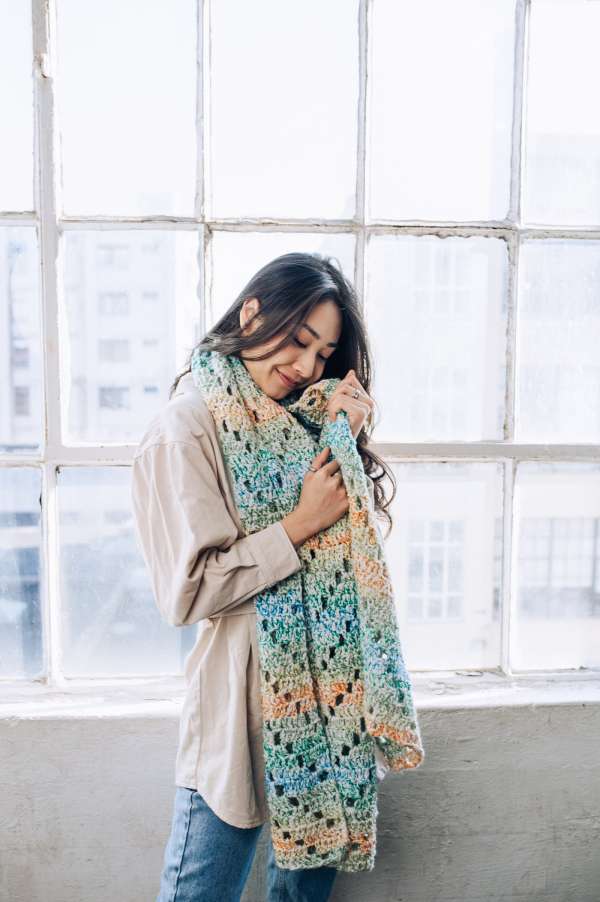
The Sadie Shawl is a crochet shawl pattern made with bulky weight yarn that has an easy level of difficulty. This pattern is available free of charge over at the Lionbrand.com website.
Patterns, projects and techniques
The Sadie Shawl is a crochet shawl pattern made with bulky weight yarn that has an easy level of difficulty. This pattern is available free of charge over at the Lionbrand.com website.
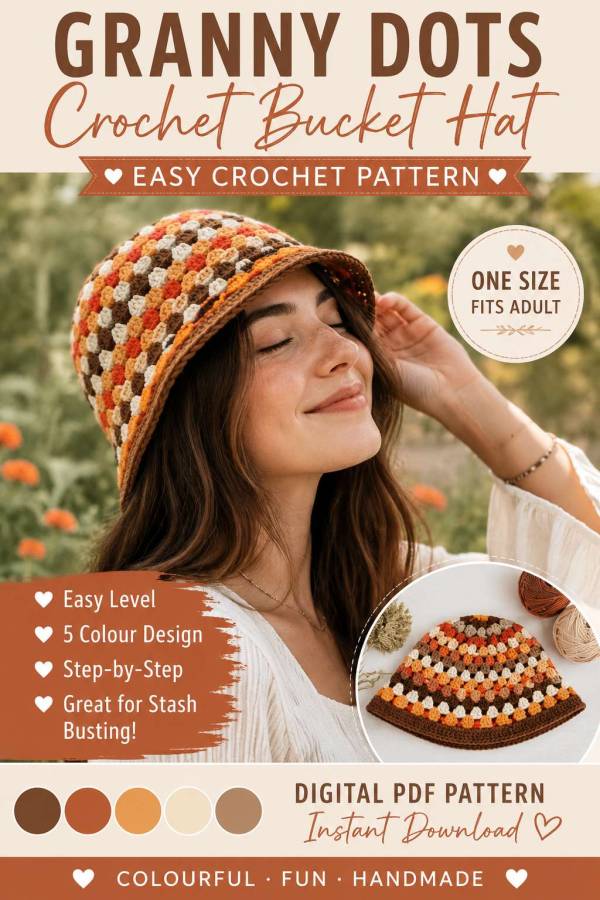
There is something wonderfully cheerful about a crochet bucket hat, especially when it has that granny-style texture that makes us all say, “Oh yes, I could make that in five colours from my stash.” And let’s be honest, any pattern that lets me justify keeping those half-balls of yarn tucked away in a basket is already off to a strong start.
The Granny Dots Crochet Bucket Hat Pattern is a fun, easy crochet bucket hat pattern worked in colourful granny-style clusters with a simple single crochet brim. It has that lovely retro handmade look without needing to sew together a stack of separate granny squares, which is always a win in my book because joining motifs is where many good intentions go to quietly disappear.
This pattern is written for adult one-size fit and uses medium weight yarn in five colours. It is a great stash-busting crochet project, especially if you have leftover worsted weight yarn from blankets, scarves, or all those “I only bought one skein because it was pretty” moments.
The finished hat has a playful dotted look across the crown and body, then a neat striped brim that gives it a polished finish. I especially like how easily the mood changes depending on the yarn colours. Soft pastels make it sweet and springy, oranges and browns give it a warm autumn feel, and greys and blacks make it look more modern and unisex.
If you love granny-style crochet accessories, you might also like our free Georgie Granny Cluster Bucket Hat over on CraftBits, which has a similar beginner-friendly feel and works well as a companion project for anyone wanting to try more crochet hats. You can also browse our roundup of crochet bucket hat patterns to make this summer if your hat-making mood has officially taken over the craft table.
The best thing about this pattern is that it gives you the look of granny crochet without becoming overly complicated. The crown begins in the round and builds out using double crochet groups, then continues into the body with repeating granny-style rounds. Once you understand the rhythm, it becomes one of those cosy “just one more round” projects.
The brim is worked in single crochet, which gives the edge a little more structure than the body. I always appreciate that in a crochet bucket hat because a floppy brim can go from cute to “why is this sitting on my eyebrows?” very quickly. You could also gently steam or block the brim if you want a smoother shape, especially if you are making it for photos, gifting, or selling finished hats at markets.
This is marked as an easy crochet pattern, and I think that is fair. It is not a first-ever crochet project, but it would suit a confident beginner who knows how to chain, slip stitch, single crochet, double crochet, work in rounds, and change colour. The colour changes are the only part that require a little attention, but they are also what make the hat so much fun.
For yarn, a medium weight cotton or cotton-blend would be lovely for a summer bucket hat, while acrylic or wool-blend yarn would make it warmer and softer for cooler weather. If you are buying supplies, Mary Maxim is a good place to look for colourful worsted weight yarn, and Amazon is handy for crochet hooks, yarn needles, and blocking supplies if your craft drawer has mysteriously eaten them again.
This is where the pattern really shines. Because it uses five colours, you can make it feel completely different each time.
A few combinations I would try:
Soft Pastels: blush pink, mint, lilac, buttercream, and pale blue
Autumn Spice: mustard, rust, olive, cranberry, and camel
Earth & Sky: teal, chocolate, goldenrod, dusty pink, and denim
Modern Neutral: black, charcoal, silver, cream, and soft grey
Cottage Garden: rose, lavender, sage, butter yellow, and robin’s egg blue
This is also a lovely pattern for using up scrap yarn, provided your yarns are all a similar weight. I would avoid mixing very stiff cotton with very soft acrylic in the same hat unless you are prepared for a little shaping drama. Ask me how I know.
Check your gauge before you begin, especially if you want the adult fit to come out neatly. The pattern gauge is 15 single crochet and 16 rows to 4 inches, and because hats need to fit around an actual head — not just look pretty flat on the table — gauge matters more here than it might on a scarf.
Use stitch markers to mark the beginning of each round. When you are changing colours often, it is very easy to lose track of where a round starts, particularly if you are crocheting while watching television and pretending you are “just doing one more row.”
Weave in ends as you go if you can bear it. Five-colour crochet is gorgeous, but it does come with ends, and future-you will be much happier if you don’t leave them all until the end in one terrifying little yarn nest.
This crochet bucket hat pattern is a good fit for makers who enjoy colourful crochet accessories, quick wearable projects, and stash-friendly patterns. It would make a great handmade gift for teens and adults, and it has strong market stall potential because you can create several versions in different colour palettes without changing the main pattern.
It is also a nice project for anyone who loves the look of granny squares but does not necessarily want a sewing-up session at the end. The texture gives that familiar granny crochet feel while keeping the construction more straightforward.
You could make one in soft spring colours for a festival look, one in earthy shades for autumn outfits, or one in monochrome greys for someone who insists they “don’t wear colourful things” but still secretly appreciates handmade.
This is a digital PDF crochet pattern, not a finished hat. The PDF includes the written pattern, materials, abbreviations, gauge notes, colour change guidance, brim instructions, stitch key, mockup inspiration, and colour palette ideas.
For crocheters who enjoy easy crochet hat patterns, granny stitch texture, and colourful stash-busting projects, the Granny Dots Crochet Bucket Hat Pattern is a sweet, wearable make with lots of room for personality. It is cheerful without being fussy, practical without being boring, and exactly the sort of project that makes you start looking at leftover yarn in a whole new way.