• Home
  • Suggest A DIY
  • DIY Newsletter

Crochet

Patterns, projects and techniques

  • About CraftGossip
  • Our Network
    • Bath & Body Crafts
    • Candle Making Ideas
    • Crochet Ideas
    • Cross Stitch
    • Edible Crafts
    • Felting Patterns
    • Glass Art
    • Home & Garden Ideas
    • Indie Crafts
    • Jewelry Making
    • Kids Crafts
    • Knitting Patterns
    • Lesson Plans
    • Needlework
    • Party Ideas
    • Polymer Clay
    • Quilting Ideas
    • Recycled Crafts
    • Scrapbooking
    • Sewing Patterns
    • Card Making
    • DIY Weddings
    • Not Craft Ideas
  • Giveaways
  • Roundups
  • Store
  • Search

Geometry, A New Way To Crochet

October 15, 2007 by jd wolfe

geometric-crochet.jpg

Have you seen this excellent book?

Geometrics, A New Way To Crochet by Ruthie Marks.


The concepts in this book are mathematical and are not new – but are presented in a way that even an innumerate mathphobe like me can understand, appreciate, and USE!

Since the popular book, The DaVinci Code, presented the term ‘golden ratio’ for the first time to many of us, I’ve been intrigued with the visual concepts represented by the terms golden ratio and golden triangle. Marks explores these terms by interpreting them in crochet. It seems that there is truth to the assertion that our minds and eyes truly enjoy the dimensions of the golden ratio and golden triangle. I could try to explain these terms to you, but, aw shucks, Marks does it so well that even I can understand them.

In this book, Marks covers some other interesting terrain; Dragon Curves and Fibonacci Sequence. Fibonacci sequence is a really simple mathematical principle like this:

0+1=1

1+1=2

2+3=5.

You start with a number and add that number and the one next to it in any sequence to create your new number. This is especially helpful in crochet if you want to create an interesting stripe. Using the Fibonacci Sequence and Color A and Color B, you would have 1 stripe of Color A, then 2 stripes of Color B, then 5 stripes of Color A and so forth. If this is no clearer than aluminum foil to you, get this book and you’ll understand it and see nice examples of how to apply it to your crochet.

Here’s another nice example of the use of the Fibonacci Sequence:
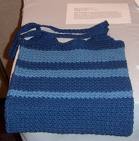
fibonacci-bag.jpg
www.toroidalsnark.net
This ‘must have’ book’s specs:

Softcover

112 Pages

Kooler Design Studio

ISBN 1601401442
«
»

Comments

  1. pguacmole says

    September 5, 2010 at 5:20 am

    1+0=1 you can’t talk about math and have that wrong !

  2. jd wolfe says

    September 5, 2010 at 8:42 pm

    How can it be you were the first reader to catch this??? Thanks.
    jd

  3. Jasmine says

    January 21, 2012 at 4:42 am

    I have this book and love it. I actually made that star blanket for my sister. She loved it!

  4. jd wolfe says

    January 23, 2012 at 9:29 pm

    Cool! Always great when we can make something that is especially appreciated by those around us.
    jd

Have you read?

How to Crochet the Suzette Stitch: An Easy Textured Crochet Stitch for Beginners

Learning a crochet stitch is much more satisfying when you have an actual project waiting at the end of it. The Suzette stitch is especially versatile because its dense, softly textured fabric works for everything from practical cotton washcloths to cosy scarves, hats and blankets.

Here are some Suzette stitch crochet patterns worth adding to your project list.

Suzette Stitch Baby Blanket

The free Suzette Stitch Baby Blanket pattern from Premier Yarns uses the stitch to create a softly textured crochet blanket with a subtle tweed-like appearance.

This would make a lovely handmade baby shower gift, particularly when worked in a washable baby yarn. The stitch creates more visual interest than plain single crochet without introducing large holes that may catch tiny fingers.

Easy Suzette Stitch Blanket

The Suzette Stitch Blanket pattern by Stitching Together is another approachable blanket project for crocheters who enjoy a relaxing stitch repeat.

This is the sort of project you can keep beside the sofa and work on a few rows at a time. Just keep an eye on those skipped stitches—television crochet is wonderful until an extra stitch quietly sneaks in three episodes earlier.

Casey Suzette Stitch Scarf

The free Casey Scarf crochet pattern uses the Suzette stitch through most of the design, producing a cosy scarf with a softly scalloped, zigzag-like texture.

It is a good first wearable project for beginners because scarves do not require complicated shaping. You can also adjust the length fairly easily or use a self-striping yarn and let the colour changes do the decorative work for you.

Quick Suzette Crochet Scarf

For another scarf option, try this free Suzette Stitch Scarf pattern from Hooked by Robin.

The designer includes written instructions and a video tutorial, making it helpful for visual learners who prefer watching the stitch placement before beginning. It is designed as a quick project and would make a practical last-minute handmade gift.

Suzette Colour Block Scarf

The free Suzette Colour Block Scarf pattern is a cheerful option for using several coordinating yarn colours.

Colour blocking also makes this a handy stash-busting crochet project. You can use leftover yarn from other makes, although it is worth choosing yarns of the same weight and similar fibre content so the sections behave themselves after washing.

Chunky Suzette Stitch Beanie

The free Chunky Suzette Stitch Beanie crochet pattern turns the textured stitch into a warm winter hat.

Chunky yarn helps the pattern work up quickly and makes the raised texture especially noticeable. This would be a useful project for craft stalls, charity donations or quick handmade Christmas gifts.

Hazel Textured Crochet Beanie

The free Hazel Beanie crochet pattern combines simple ribbing with the Suzette stitch.

The ribbed brim gives the hat a neat, finished appearance while the Suzette stitch adds texture to the main body. It looks more complicated than a basic crochet beanie but is still built from familiar beginner stitches.

Suzette Stitch Washcloth

For a small practice project, try the free Suzette Stitch Wash Cloth pattern from The Purple Poncho.

A washcloth is one of the best ways to practise a new crochet stitch because it is small, useful and not terribly demanding. Even if the first one is slightly wonky, it will still wash perfectly well.

Use a smooth cotton yarn so the cloth is absorbent and the stitch texture remains clearly visible.

Suzette Ridge Crochet Washcloth

The free Suzette Ridge Crochet Washcloth pattern adds another layer of texture to this familiar stitch combination.

Make several in coordinating colours and pair them with handmade soap for an easy spa-style gift. They are also useful little projects for testing unfamiliar cotton yarn before committing to a larger set.

Corner-to-Corner Suzette Stitch Washcloth

The free C2C Suzette Stitch Washcloth pattern gives the stitch a slightly different construction by working it from corner to corner.

This is a good next project after you have mastered ordinary flat rows. It lets you explore increasing and decreasing while still using the familiar Suzette stitch combination.

Suzette Stitch Afghan Square

The Suzette Stitch Afghan Square pattern turns the textured stitch into a smaller crochet block.

Afghan squares are useful for charity blankets, sampler blankets and portable crochet projects. You can make the squares individually, use up leftover yarn and join everything together once you have enough—although “enough” has been known to become a surprisingly flexible number in my craft room.

More Suzette Stitch Crochet Pattern Ideas

Once you are comfortable with the basic stitch, you can also use it to make:

  • Crochet mug cosies
  • Ear warmers and headbands
  • Fingerless gloves
  • Cushion covers
  • Tote bags
  • Baby rompers
  • Crochet cardigans
  • Lap blankets
  • Double-thick potholders

You can browse additional Suzette stitch crochet patterns on Etsy, including sweaters, baby blankets, beanies, mug cosies and accessories from independent crochet designers.

When choosing a pattern, check whether it uses US or UK crochet terminology. Also check whether it uses the traditional Suzette stitch—one single crochet and one double crochet worked into the same stitch—or a designer’s variation of it. That quick check can prevent a great deal of confused unraveling later.

More Articles

Afghans, Blankets & Throws amigurumi Baby Hat Baby Patterns bags Beanies Beginner Book Reviews Christmas CHRISTMAS Clothing Crochet Patterns Crochet Techniques & Ideas Free Crochet Patterns Granny Squares Halloween Patterns Quick Scarfs shawls

RSS More Articles

  • Sewing Pattern Saturday Review: Snood with Ears Beanie Hat Sewing Pattern (PDF)
  • Peyote Stitch Ring Patterns: Tiny Seed Bead Projects You Can Finish Fast
  • Book Review- Scrappiness Is Happiness – Inside The Book
  • 13 Modern Western Crochet Patterns for Line Dancers, Cowgirls and Horse Lovers
  • 12 Quick Fingering Weight Yarn Knitting Patterns For Using Up Sock Yarn
  • Free Labradoodle Digital Stamps for Card Making and Paper Crafts
  • 55 FREE Christmas Digital Sentiments – Christmas in July
  • DIY Soothing Bug Bite Powder – A Natural Itch Relief Remedy That Works
  • Freebie Friday – Free Printable Grungy Food Label Junk Journal Images
  • FREE “Campfire Stories” Font to Download

Pick Your Blog

  • Sewing
  • Knitting
  • Quilting
  • Crochet
  • Home & Garden
  • Recycled Crafts
  • Scrapbooking
  • Card Making
  • Polymer Clay
  • Cross-Stitch
  • Edible Crafts
  • Felting
  • Glass Art
  • Indie Crafts
  • Kids Crafts
  • Jewelry Making
  • Lesson Plans
  • Needlework
  • Bath & Body
  • Party Ideas
  • Candle Making
  • DIY Weddings
  • Not Craft
  • Free Craft Projects

Copyright © 2026 · CraftGossip | Start Here | Contact Us | Link to Us | Your Editors | Privacy and affiliate policy