• Home
  • Suggest A DIY
  • DIY Newsletter

Crochet

Patterns, projects and techniques

  • About CraftGossip
  • Our Network
    • Bath & Body Crafts
    • Candle Making Ideas
    • Crochet Ideas
    • Cross Stitch
    • Edible Crafts
    • Felting Patterns
    • Glass Art
    • Home & Garden Ideas
    • Indie Crafts
    • Jewelry Making
    • Kids Crafts
    • Knitting Patterns
    • Lesson Plans
    • Needlework
    • Party Ideas
    • Polymer Clay
    • Quilting Ideas
    • Recycled Crafts
    • Scrapbooking
    • Sewing Patterns
    • Card Making
    • DIY Weddings
    • Not Craft Ideas
  • Giveaways
  • Roundups
  • Store
  • Search

CROCHET PAIN

July 23, 2009 by jd wolfe

Sadly, annoyingly, this topic has been on my mind lately.  I’ve started wearing a splint at night for sleep and it’s helping.  I DO NOT want to get into advice giving here.  A crochet blog is not the place for medical advice sharing.  But, I have looked around on the web for ideas that might make crocheting easier on me.  So, I’m gonna share a few of those ideas.

First, this looks funny but might be very helpful and the accompanying article has some good hints:
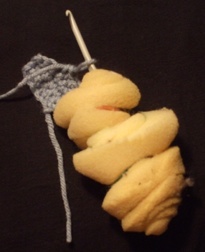
crochet-hook-with-foam-0709

http://www.craftycrafty.tv/2007/09/dont_give_up_crochet_because_o.html

There are other hooks available that call themselves ‘ergonomic’.What does ‘ergonomic’ mean?  Here’s a good definition:

Ergonomics is the science of adapting the job and/or the equipment and the human to each other for optimal safety and productivity.

It makes sense to me that if a hook fits my hand nicely and I keep my elbows close to my body while crocheting, I’ve created the safest way for the muscles, tendons, bones, and nerves in my upper extremities to crochet safely.  The thing about keeping elbows close to the body came from #1 Nancy Nehring during a class I took in 2001, and #2 Laura, the hand therapist I worked with after I broke my left wrist a couple years ago.  I figure that’s good information – and, even if it’s not written in granite by the world’s leading orthopedist, it can’t hurt, right?

This one is hand turned and available at the site linked below it.
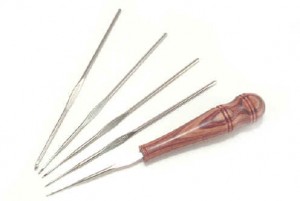
ergo-hook-4-0709

http://www.woodbyc.com

Here are some other ergonomic hooks that are widely available (Michael’s, Hobby Lobby, Walmart).   Check them out to see if one might work for you.
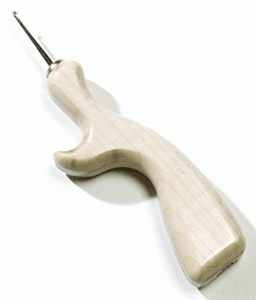
ergo-hook-2-0709

ergo-hook-3-0709

«
»

Comments

  1. Cindy says

    July 23, 2009 at 4:43 am

    I must hold my crochet hook wrong as none of those handles would be touched while crocheting. I hold my hook like I hold a pencil.

  2. Kcrystina says

    July 23, 2009 at 9:16 am

    Thank you SO much for this post. I too deal with pain while crocheting due to carpal tunnel syndrome in my wrists and Fibromyalgia. Most of the time I work through the pain or I go do something else for a while. I’ve also found that if I have a few different projects on the go, switching projects every once in a while tends to help too.

    I’ll have to check out those links and products.

  3. Painful says

    July 23, 2009 at 2:38 pm

    I feel like I have to say something to all those people reading this who might be in pain from crocheting or knitting:

    STOP!

    You hurt because your body is trying to tell you something. It is warning you it is tired of doing that repetitive motion and that you need to stop or you risk further injury. I knitted and knitted. First, my thumb began hurting, so much I could not lift a cookie sheet. I “rested” it by crocheting instead. My neck/shoulder muscles began hurting. Not long after that, I got a major cramp in my shoulder blade and things got progressively worse from there. Now, I cannot use my arms like normal people. They hurt with the simplest of activities. I feel I knitted myself into a serious injury. For the last two years I have been seriously limited and in much pain. I don’t mean to scare, but I wish someone had told me.

    Please, if you hurt…stop now and treat the injury you have. No afghan or sweater is worth the pain you might face later.

  4. Kate Wallis says

    July 25, 2009 at 11:03 pm

    Thanks for the suggestions! I have used fimo (modeling clay) to shape a grip onto my hooks. basically I just got a blob of fimo, wrapped it around the middle to back portion of the hook, gripped it in my hand how I do when I crochet and baked it. the aluminum in the hooks doesn’t seem to mind, and TA DA! a made to fit ergonomic hook! Hope this helps a little

  5. teresa Maria says

    July 29, 2009 at 6:52 am

    Still working on website. I learned crochetting at 7 from a 75 year old neighbor. I believe the problems you all have is due to the way you hold the hooks. The way I learned I hold the hook with my right hand, being right handed, but my left hand holds the thread in a very natural way I put the thread between my middle and index finger and hold it softly with my thumb for tension. At the beginning you develop a little bit of calluses on your index finger facing the needle but that is temporary until your skin gets used to it. I also hold the work right in front of me not looking to the side or anything you might want to rest your elbows on the arms of the chair you seat on. One very important suggestion do not wear a watch on either wrist. I have been crochetting for a few decades and do not have any of the problems listed by the readers. Hope this is helpdul.

  6. rose says

    November 21, 2009 at 4:25 pm

    I think i’m trying very hard to learn my throat hurts and my neck and fingers are sore as well… i wish i could learn without any pain because i love it.

  7. lolita says

    January 30, 2010 at 12:18 pm

    well.. i am glad to see i am not the only one who lays awake at night bc they cannot crochet.
    last year i had to quit knitting because it hurt too much. Now, 8 months later, i can knit only about 2 rows before i am up all night in pain.
    I am working on a blanket right, crocheted, and had to quit. I got 8 rows done, and laid on the couch 2 nights in a row from pain.

    I hope your ideas are a saver;) I am going to try. I thought about buying those smooshies you buy to put on pencils for little kids. I just dont know if they sell them anymore.

    What a horrible thing crafting is going to be to me, if i cant do it because of pain.
    there must be others out there like us suffering – and whats worse– some of us use crocheting or knitting as a way to escape life for a while.
    a horrible cycle.

    anyways my point was, thank you for posting this and making us not feel alone!

  8. jd wolfe says

    February 2, 2010 at 10:36 pm

    Lolita,
    you’re definitely not alone – thus all the ergonomically designed crochet tools. and yes, those smooshies are still made. just look in the school supply aisle at target, walmart, whatever. they don’t fit all hooks, however. others use some foam material they get at the hardward store and tape or glue on. others use the baking clays to create a custom grip. not too hard to do, but takes some experimentation. if you haven’t tried the clover soft touch hooks, i do recommend them. i like the softer grip on them.
    jd

  9. Janey says

    October 12, 2010 at 3:52 pm

    I have some things that may make it easier- looms- like in knitting, you trade the bottom and the top loop and Nothing on your body will wiggle! I have shoulder pain and it seems like that lady said, a Mad injury ( well, a Warning ) I am NOT going to lie on a sofa in pain because I am having an injury- I bought the ultimate sweater machine, its like ironing- the looms also help too. Much luck to All of us in a knot over this problem, but how do you get out of shoulder pain? I have a Bump right above my shoulder blade, AND SEVERE acid problems.

  10. Victoria Richards says

    September 17, 2012 at 11:06 am

    I have been knitting & crocheting for years. I am left handed & no one could teach me so I learned right handed sitting beside my right handed sister & watching till it clicked with me. Now that I can do all of this right handed I have tried to teach myself lefthanded & I just can’t get it. Anyway I totaly have hand probs & can’t fint the spongy things that go over the hooks. I cannot get the pencil grips to go on the hooks. Please help……………….

  11. Leelee says

    January 17, 2013 at 2:56 am

    Okay, I get pain when I knit or crochet. It is definitely the muscles working, they’re not used to it. I do it little and often and building up the strength I need. The same with any new activity it is going to hurt. My consultant certainly hasn’t told me to stop, in fact he says it’s brilliant that I am doing exercises for my hands! I also use theraputty (always have) to help build strength. Don’t stop completely, but don’t cripple yourself! Little and often and build it up slowly!

  12. jd wolfe says

    January 17, 2013 at 8:07 pm

    I think this is probably pretty good advice. Thanks! Typically, pain is a guide that we should listen to. But, it makes sense that when developing new muscles, there will be some discomfort. Just try getting off the sofa and running a mile – using muscles you haven’t used since 11th grade. Then, you’ll be reminded about those unused muscles!
    jd

Have you read?

How to Make a Crochet Vision Board – Plan the Crochet Projects You Actually Want to Make

If your saved crochet patterns are starting to resemble a small digital library and your yarn stash contains enough “future projects” to keep you occupied until approximately 2047, you might need a crochet vision board.

And yes, I absolutely understand the irony of spending craft time making a board about all the other crafts we intend to make.

But hear me out.

A crochet vision board isn’t simply a pretty collage of yarn photographs. It can be a genuinely useful way to decide which crochet projects you actually want to make, which techniques you’d like to learn and — perhaps most importantly — which yarn you already own that deserves to become something.

Instead of scrolling through hundreds of saved crochet patterns every time you feel like starting something new, you create one visual collection of your crochet plans for the next few months or the year ahead.

Think blankets, cardigans, granny squares, amigurumi, Christmas gifts, new stitches, beautiful colour combinations and those slightly ambitious projects you keep telling yourself you’ll tackle “one day.”

Let’s turn one day into an actual plan.

What Is a Crochet Vision Board?

A traditional vision board contains pictures, words and ideas representing things you’d like to achieve.

A crochet vision board simply gives that idea a yarn-loving makeover.

Your board might include:

  • Crochet patterns you’d like to make
  • Yarn colours you want to work with
  • Crochet stitches you want to learn
  • Wearable crochet projects
  • Blanket inspiration
  • Amigurumi projects
  • Handmade Christmas gift ideas
  • Crochet projects for your home
  • Stash-busting goals
  • Photos of yarn you already own
  • Crochet techniques you’d like to master
  • Bigger “dream projects” that challenge your skills

It can be physical, digital or a combination of both.

Personally, I rather like the physical version. There is something satisfying about seeing all that colourful crochet inspiration sitting above your craft desk — especially when the alternative is having 387 screenshots buried somewhere on your phone.

What You’ll Need to Make a Crochet Vision Board

You really don’t need anything fancy.

For a physical crochet project vision board, try:

  • Corkboard, magnetic board, foam board or large piece of cardstock
  • Printed crochet project photographs
  • Magazine clippings
  • Yarn labels
  • Small yarn samples
  • Colour swatches
  • Pattern thumbnails
  • Pins, tape or glue
  • Scissors
  • Marker pens
  • Sticky notes
  • Decorative stickers or scrapbook supplies

A simple cork noticeboard from Amazon works particularly well because projects can be moved, removed and replaced as your crochet plans change.

And they will change.

We are crocheters. A new yarn colour can derail six months of carefully organised plans in approximately three minutes.

Step 1: Decide What You Want From Your Crochet Year

Before printing gorgeous photographs of 27 blankets you couldn’t possibly finish, think about what you’d genuinely like to accomplish.

Try dividing your crochet plans into a few categories.

Projects I Really Want to Make

Start with the projects you’ve been thinking about repeatedly.

Maybe it’s:

  • A granny square cardigan
  • A beautiful crochet throw
  • A summer crochet bag
  • A chunky winter blanket
  • A handmade baby gift
  • A crochet sweater
  • A set of Christmas decorations
  • Your first amigurumi toy

If amigurumi has been sitting on your “someday” list, browse these 21 crochet amigurumi projects and choose one or two favourites rather than attempting to populate your vision board with an entire crocheted zoo.

Skills I Want to Learn

Your board doesn’t have to be purely project based.

Add techniques you’d like to learn, such as:

  • Tapestry crochet
  • Tunisian crochet
  • Mosaic crochet
  • Crochet cables
  • Corner-to-corner crochet
  • Colourwork
  • Garment construction
  • Blocking
  • Joining granny squares
  • Reading crochet charts
  • Invisible joins
  • Amigurumi shaping

If you’re still building your basic skills, our Crochet for Beginners stitch and project guide is a useful place to start.

Don’t make every goal difficult, either. One challenging project surrounded by several comfortable ones is far more likely to keep you crocheting than a board full of projects that require concentration, counting and complete silence from everyone in the house.

Step 2: Choose Your Crochet Colour Palette

This might be my favourite part.

Instead of choosing individual projects first, try choosing colours you’re drawn to.

Pin up snippets of yarn, paint chips, fabric scraps or printed colour palettes.

You might discover you’re repeatedly choosing:

Soft neutrals: oatmeal, cream, sage and dusty pink.

Retro brights: mustard, orange, avocado, turquoise and brown.

Coastal colours: aqua, navy, sand and white.

Cottage colours: faded rose, lavender, cream and soft green.

Jewel tones: emerald, plum, ruby and deep blue.

Once you’ve spotted a colour direction, finding projects becomes much easier.

It can also stop the classic craft-shop problem where you buy six beautiful balls of yarn individually and arrive home to discover none of them actually want to be friends.

Step 3: Photograph Your Yarn Stash

This is where a crochet vision board becomes genuinely useful rather than simply decorative.

Take photographs of yarn you already own.

Especially photograph those yarn purchases that were bought because:

“It was too pretty to leave behind.”

You know the ones.

Print small photographs and add them to your board with a note showing approximately how much yarn you have.

For example:

8 balls cream DK — cardigan

4 balls mustard worsted — cushion?

Mixed sock yarn — scrap project

Leftover cotton — market bag or coasters

Then match your existing yarn to potential projects.

If using up leftovers is high on your list, have a look at these scrap yarn crochet project ideas for inspiration.

Suddenly your crochet vision board becomes part inspiration board and part stash-management system.

Which, frankly, some of us desperately need.

Step 4: Add Your Dream Crochet Projects

Now you can indulge yourself.

Choose several crochet projects you would absolutely love to make, regardless of whether you’re quite ready for them yet.

Maybe you’ve always wanted to crochet:

  • An intricate heirloom blanket
  • A fitted cardigan
  • A floor-length coat
  • A large mandala
  • A detailed amigurumi collection
  • A beautiful textured bedspread
  • An elaborate Christmas blanket

For blanket inspiration, something like this Woodland Wonders Crochet Blanket makes a brilliant “stretch project” because it incorporates several textured crochet techniques.

Don’t put ten enormous blankets in this section.

Pick one or two dream crochet projects.

Otherwise it stops being a vision board and becomes evidence against you when someone asks why there are another twelve boxes of yarn arriving.

Step 5: Include Some Quick Crochet Wins

This is important.

Not every crochet goal should involve 2,000 metres of yarn and several months of your life.

Add quick projects too:

  • Crochet coasters
  • Scrunchies
  • Dishcloths
  • Headbands
  • Granny squares
  • Small bags
  • Baby hats
  • Crochet flowers
  • Cup cosies
  • Fingerless gloves
  • Small amigurumi
  • Christmas ornaments

Quick projects keep your crochet motivation going between larger makes.

They’re also wonderful stash-busters and handmade gifts.

I particularly like adding a little “Weekend Crochet” section to the board. These are projects you could realistically start on Friday night and have finished — or at least recognisably underway — before Monday rolls around.

Step 6: Create a Crochet Gift List

If you crochet gifts for birthdays and Christmas, dedicate one area of your board to recipients.

For example:

Mum: shawl
Grandchild: amigurumi
Teacher gift: crochet mug cosy
Christmas: four ornaments
New baby: blanket

Add deadlines underneath.

This is considerably better than suddenly remembering on December 17 that you’d planned to crochet eight handmade presents.

Ask me how I know.

Crochet kits can also be useful for gift projects because you’re not hunting around for matching yarn and supplies at the last minute. Mary Maxim crochet kits are worth browsing when you want a complete project ready to start rather than assembling everything separately.

Step 7: Add One Stash-Busting Challenge

Give yourself one goal that involves yarn you already have.

For example:

Crochet 12 projects from my existing stash before buying more yarn.

Or, if we would like to remain within the realms of reality:

Use three skeins before buying another six.

Your challenge could be:

  • Finish one WIP each month
  • Make a scrap blanket
  • Crochet only from your stash for 30 days
  • Use all your cotton scraps
  • Turn leftover yarn into granny squares
  • Make six gifts entirely from stash yarn
  • Finish three abandoned crochet projects

The goal isn’t to make yourself feel guilty about owning yarn.

Yarn collecting and crocheting are, after all, closely related hobbies.

The idea is simply to reconnect some of that beautiful yarn with the reason you bought it in the first place: to make something.

Step 8: Add a “Finish These First” Corner

Ah yes.

The WIPs.

Most crocheters have at least one project quietly judging them from a basket.

Take photographs of your unfinished crochet projects and create a small Finish These First section.

Don’t add everything.

Choose perhaps three.

A blanket needing twelve more rows feels far less intimidating when you can actually see how close it is to completion.

And there’s something deeply satisfying about removing a project from the board when it’s finished.

Step 9: Add Crochet Inspiration That Isn’t a Pattern

Not everything on your crochet vision board needs to link to a particular project.

Add things that simply make you want to create:

  • A beautiful cottage interior
  • Vintage crochet
  • Flowers
  • Fashion photographs
  • Interesting architecture
  • Traditional textiles
  • Colour combinations
  • Nature photography
  • Interior design
  • Old blankets
  • Crochet stitches
  • Favourite quotes

A photograph of autumn leaves might eventually inspire a rust-and-mustard blanket.

A vintage floral wallpaper might become the colour palette for granny squares.

You don’t always need to know why something appeals to you.

Pin it up and see where it takes you.

Try a 12-Month Crochet Vision Board

If a big board feels overwhelming, divide yours into twelve smaller monthly crochet goals.

For example:

January: finish an old WIP
February: crochet something red or pink
March: learn a new stitch
April: make a bag
May: stash-busting project
June: crochet something cosy
July: start a blanket
August: crochet a wearable
September: begin handmade Christmas gifts
October: Halloween crochet
November: Christmas decorations
December: finish gifts and choose next year’s projects

You don’t have to follow it religiously.

This is crochet, not military training.

Move things around when inspiration strikes.

Make a Digital Crochet Vision Board

Prefer everything on your phone or tablet?

You can make exactly the same style of board digitally using:

  • Pinterest
  • Canva
  • Google Slides
  • A photo collage app
  • Notes on your phone
  • A private Pinterest board

Create sections for projects, colours, yarn stash, techniques and gifts.

Pinterest is particularly dangerous — I mean useful — for this because one crochet blanket inevitably leads to another blanket, which leads to a cardigan, which leads to a granny square tote bag and suddenly it’s midnight.

The important part is to curate rather than continuously save.

Choose the projects that still excite you after you’ve looked at them several times.

Those belong on your actual crochet vision board.

Don’t Turn Your Crochet Vision Board Into Another To-Do List

This is probably the most important part.

Your crochet vision board should make you want to pick up your hook.

It shouldn’t make you feel behind.

Crochet is meant to be enjoyable.

If you lose interest in that enormous neutral-coloured blanket you pinned six months ago, take it off.

If you suddenly fall in love with ridiculously colourful crochet flowers, add them.

If your carefully planned beige-and-sage year becomes bright orange granny squares by March, congratulations — you’re a crafter.

Plans change.

Creativity should be allowed to change with them.

A Simple Crochet Vision Board Formula

If you’re not sure where to begin, try this:

1 Dream Project
Something ambitious that you’d love to accomplish.

2 Wearables
Cardigans, scarves, hats, bags or other crochet accessories.

3 Quick Projects
Projects you can finish when you need an easy win.

1 New Technique
A crochet skill that stretches you slightly.

1 Stash Project
Something made primarily from yarn you already own.

3 Handmade Gifts
Specific projects for specific people.

1 WIP to Finish
Because we both know it’s sitting there.

That’s enough inspiration to keep you interested without turning your craft room wall into a five-year production schedule.

Your Crochet Board Should Make You Want to Pick Up Your Hook

The best crochet vision board isn’t necessarily the prettiest one.

It’s the one you actually use.

Put it somewhere near your yarn or crochet chair. When you’ve finished a project, remove it, date it or add a little tick beside it.

Over time you’ll have a lovely visual record of what you’ve made — and probably a few projects that have stubbornly survived on the board for several years.

Those are allowed too.

Sometimes we need practical projects.

Sometimes we need to learn new things.

And sometimes we simply need a beautiful photograph of an absurdly complicated crochet blanket pinned above our desk so we can continue telling ourselves:

One day. I’m definitely making that.

More Articles

Afghans, Blankets & Throws amigurumi Baby Hat Baby Patterns Beanies Beginner Book Reviews Christmas CHRISTMAS Clothing Crochet Patterns Crochet Techniques & Ideas Easy Crochet Patterns Free Crochet Patterns Granny Squares Halloween Patterns Quick Scarfs shawls

RSS More Articles

  • 4 Crayon Cutable or Printable Files for Back to School
  • How to Make a Crochet Vision Board – Plan the Crochet Projects You Actually Want to Make
  • What to Serve with Rotisserie Chicken: 21 Delicious Sides You’ll Want on Repeat
  • Etsy Feature – Moth Pottery Template for Slab Building
  • Hubcap Creatures: Transforming Roadside Finds into Sculptural Wildlife
  • Learning about Georgia for Kids
  • How to Make a Moth Birthday Card
  • DIY Giant Eyeball Lanterns – Creepy Halloween Decoration
  • Designer Spotlight: Artmishka Cross Stitch
  • Freebie Friday – Grungy Pumpkins and Fall Tags Junk Journal Printables

Pick Your Blog

  • Sewing
  • Knitting
  • Quilting
  • Crochet
  • Home & Garden
  • Recycled Crafts
  • Scrapbooking
  • Card Making
  • Polymer Clay
  • Cross-Stitch
  • Edible Crafts
  • Felting
  • Glass Art
  • Indie Crafts
  • Kids Crafts
  • Jewelry Making
  • Lesson Plans
  • Needlework
  • Bath & Body
  • Party Ideas
  • Candle Making
  • DIY Weddings
  • Not Craft
  • Free Craft Projects

Copyright © 2026 · CraftGossip | Start Here | Contact Us | Link to Us | Your Editors | Privacy and affiliate policy