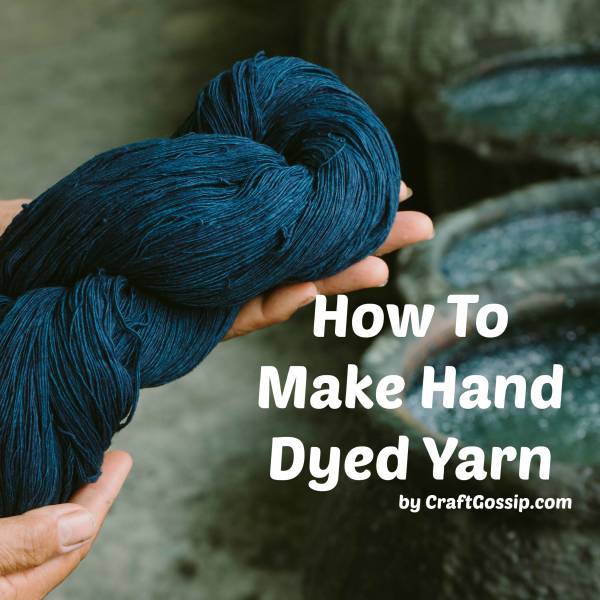
The biggest difference between dyeing your own yarn with acid dyes and using food safe dyes like Wilton’s food coloring
 or dyeing yarn with Kool-Aid
 , is that you need a whole new set of dyeing tools. It is not safe to cook in a pot in which you have dyed with acid dyes. Here are a few materials you should invest in before getting started.
Materials
Large stock pot (able to hold at least two gallons of water)
Metal measuring spoons
Set of wooden spoons or dowels
Tongs
Good, sturdy rubber gloves (dish gloves work great and are reusable.)
Containers for mixing dye stock (old jam jars are a cheap and simple option)
A good particulate mask
White vinegar
Water
Newspaper to protect counter tops and other surfaces
Dark colored apron
Stove top
Mixing Dye Stock
The first step to mixing dye stock is to make sure you have taken the proper safety measures. Acid dye powder is very fine, which makes it easy to inhale. You don’t want to inhale that. Also be sure to use gloves to protect your hands and an apron to protect your clothes, as well as newspapers to protect your kitchen counters.
Place 1 tsp (this is a good starting place for most colors) of dye powder into jam jar
Add 1/2 cup hot water from the tap
Add 1/2 cup boiling water
Stir and allow to cool
You now have your dye stock. I would do this with as many colors as you like, and then mix the dye stock instead of the dye powder to create new colors. I have found mixing stock to be much more predictable.
Preparing the Yarn
For the best chance of even distribution of color, the yarn must be wound into a skein, which is just a big loop, loosely tied at intervals around the loop so that the yarn does not tangle. Most yarn that you can get for dyeing comes already skeined. I would add a couple of extra ties as manufacturer ties always seem to come a little loose during the dyeing process.
The yarn needs to soak in a water and vinegar bath for at least half an hour before the dyeing process. This opens up the wool so that it takes up the dye more readily. This is also where you add your mordant: vinegar. Fill either your sink or a small tub with enough cool water to submerge the yarn and add 1 cup vinegar.
After thirty minutes to an hour, gently wring the water from the yarn, being mindful of felting, and allow to hang while you prepare the dye pot.
Preparing the Dye Pot
Measure out at least one gallon of water for one skein of yarn. I would add two gallons if you are dyeing two or more skeins in the same pot.
Add about 2-3 tablespoons of vinegar (about a glug).
Clad in gloves and an apron, measure out dye stock a tablespoon at a time so that you can keep track of your recipe, should you want to duplicate this color in the future.
If you want to mix colors, this is where I recommend doing so.
Give the whole pot a good stirring so your dye solution is even.
The Dyeing Process
Place the yarn in the dye solution, ge ntly squeezing out any air bubbles.
Place the pot on the stove top and warm it to medium heat.
Keep the pot simmering, but never boiling, for 30 minutes to an hour or until the water is clear.
Allow the pot and yarn to cool enough to handle.
Rinse yarn in water that is a similar temperature to the yarn (always mindful of felting) until the water runs clear.
Soak yarn in warm water with a wool wash or gentle shampoo for 15 minutes.
Rinse in warm water for another 15 minutes.
Hang to dry (on a hanger in your shower is a good place).